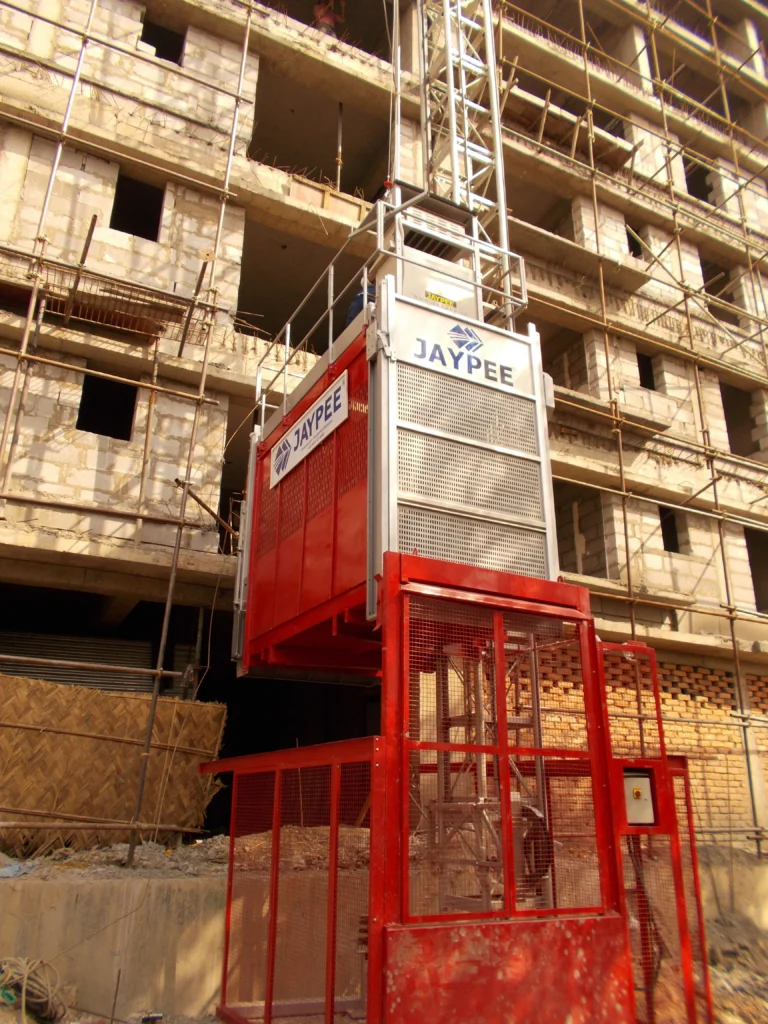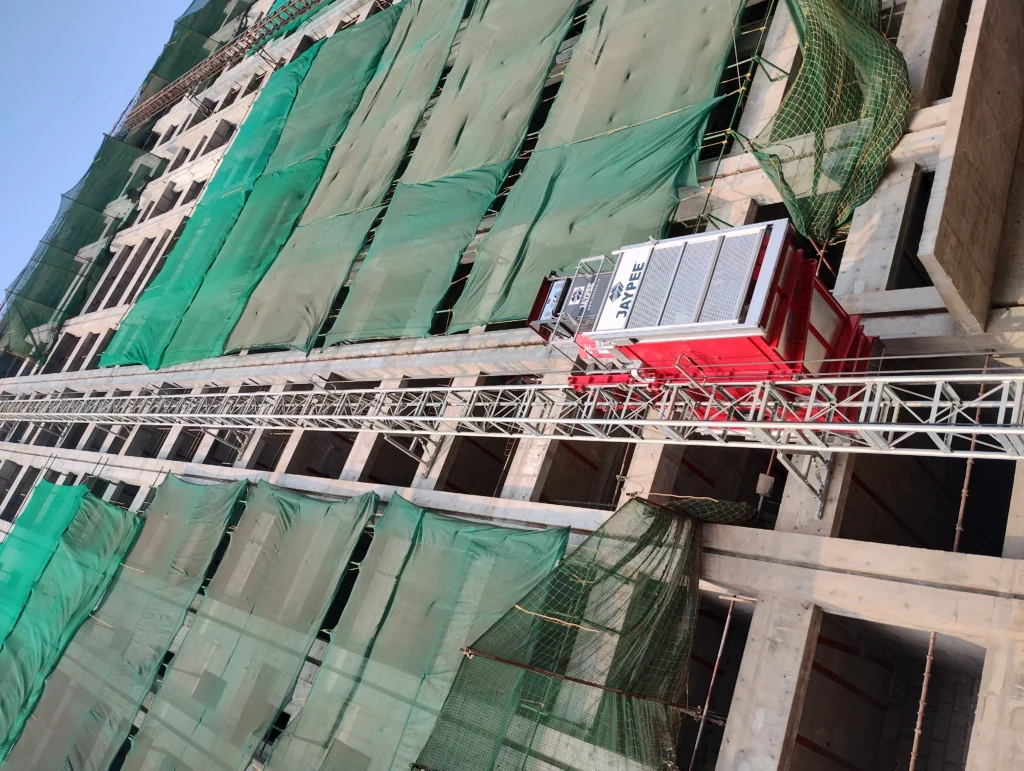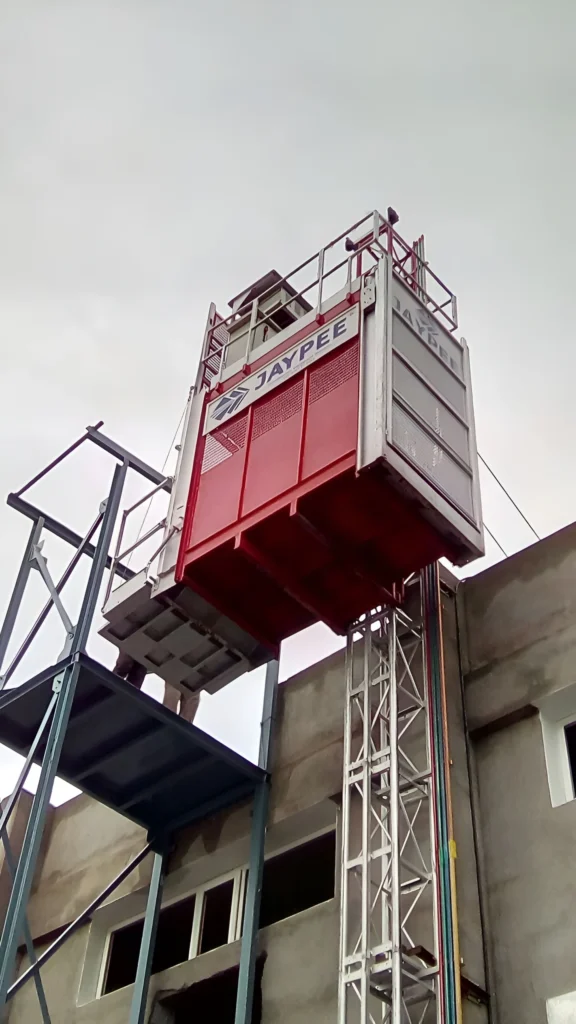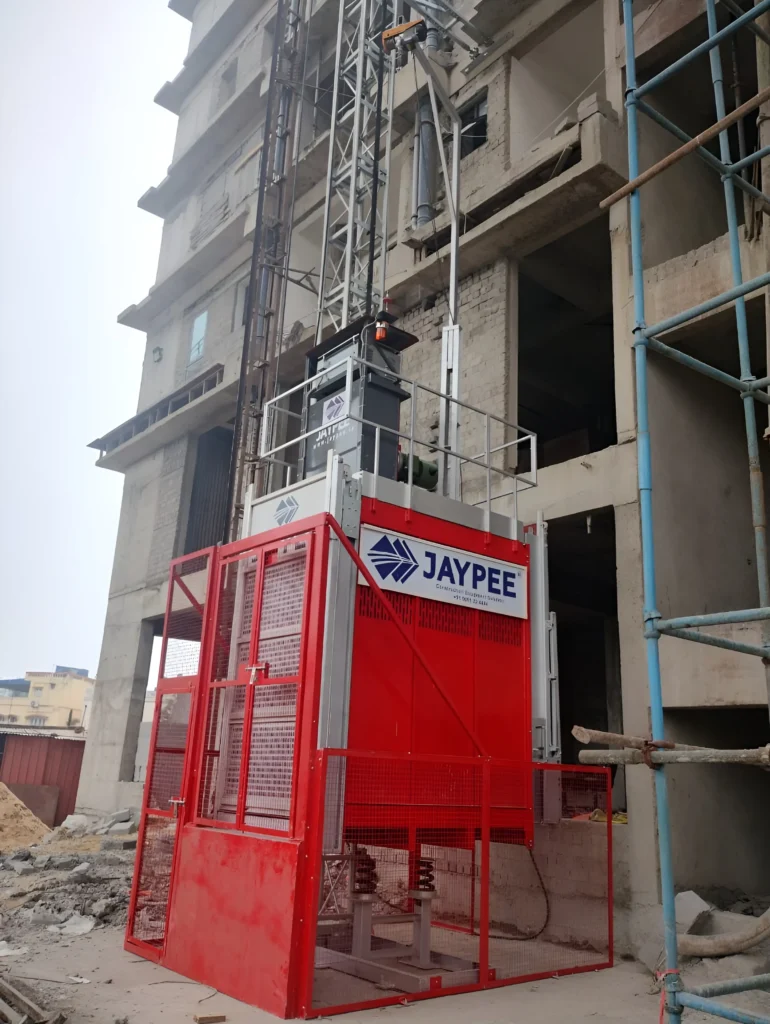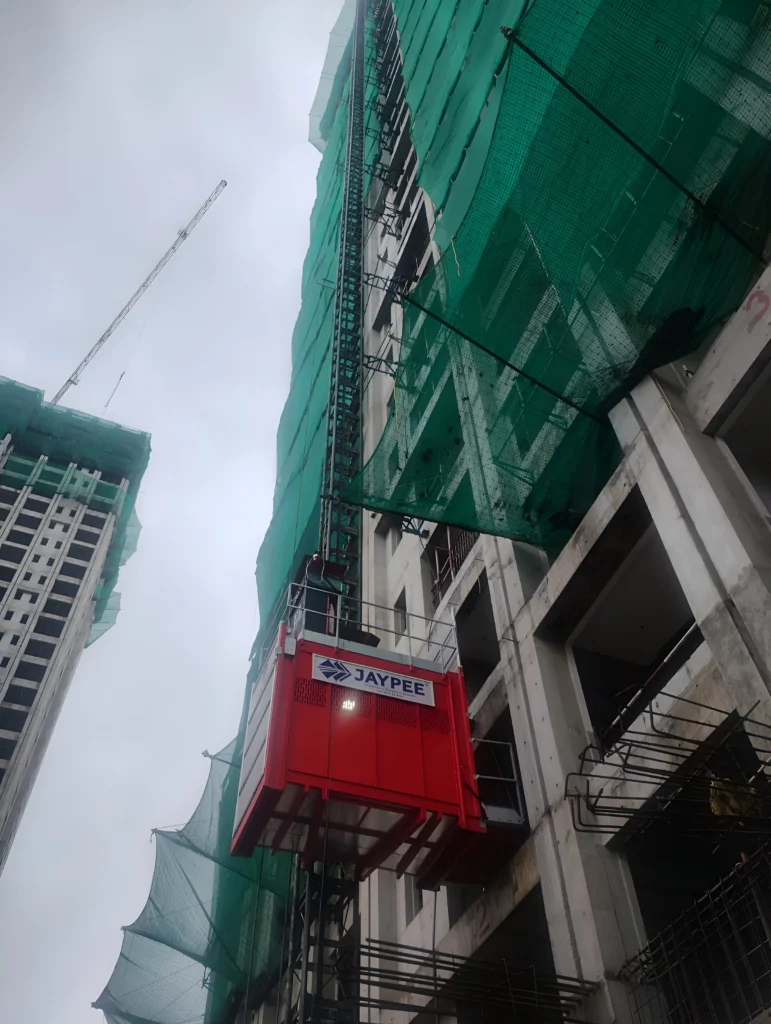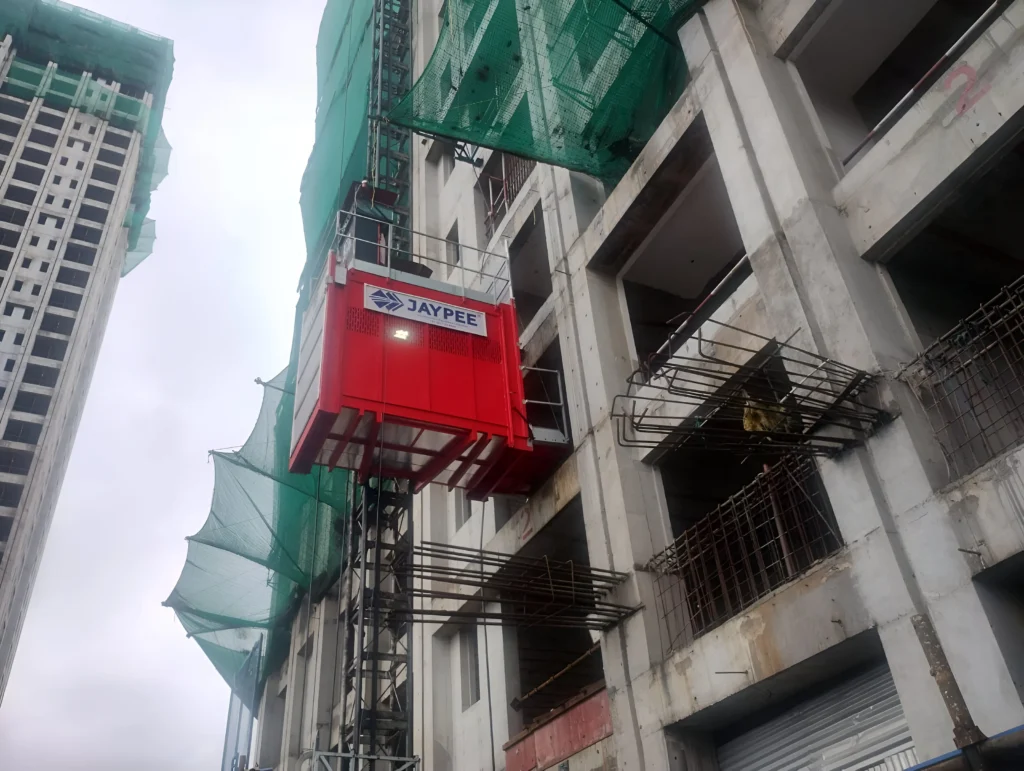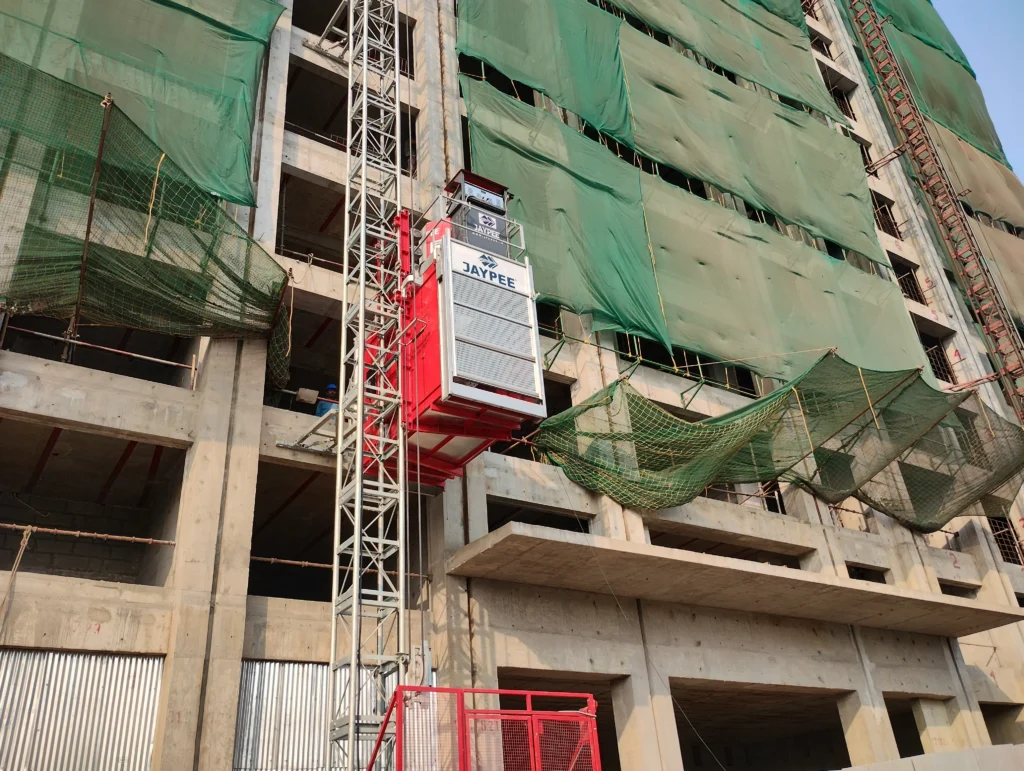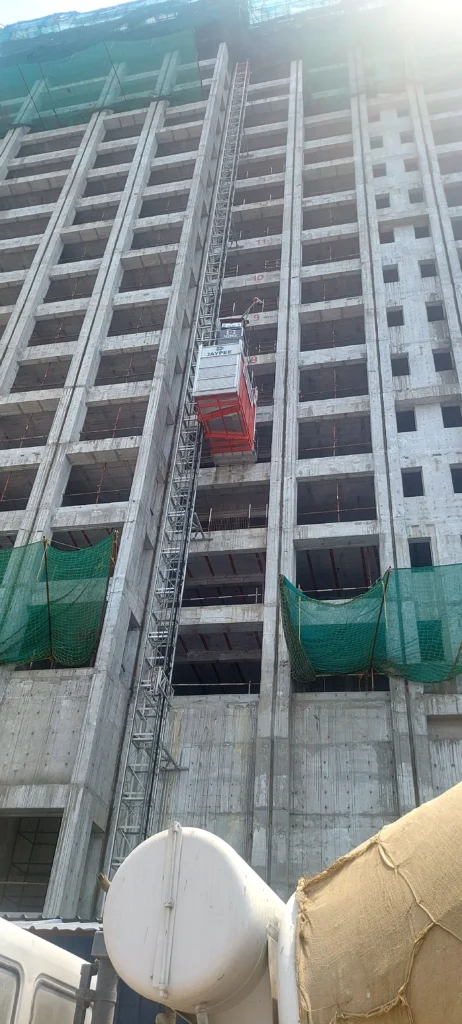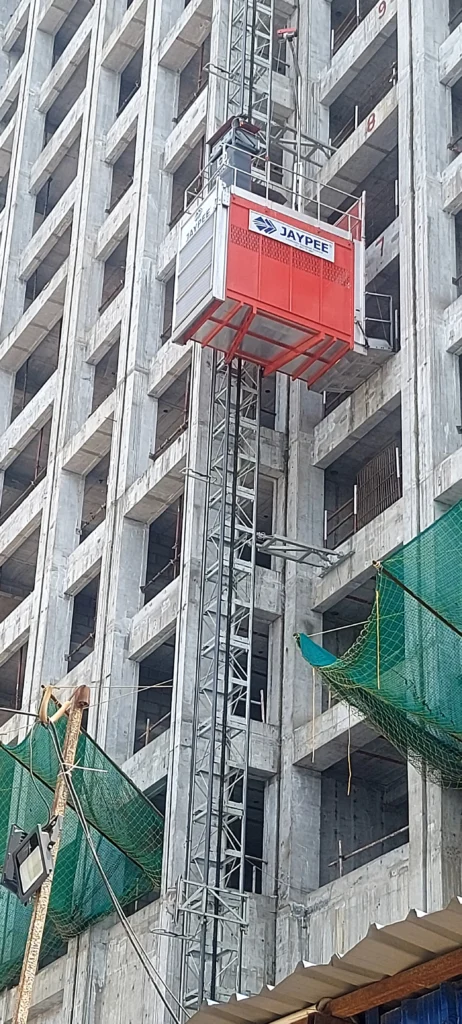

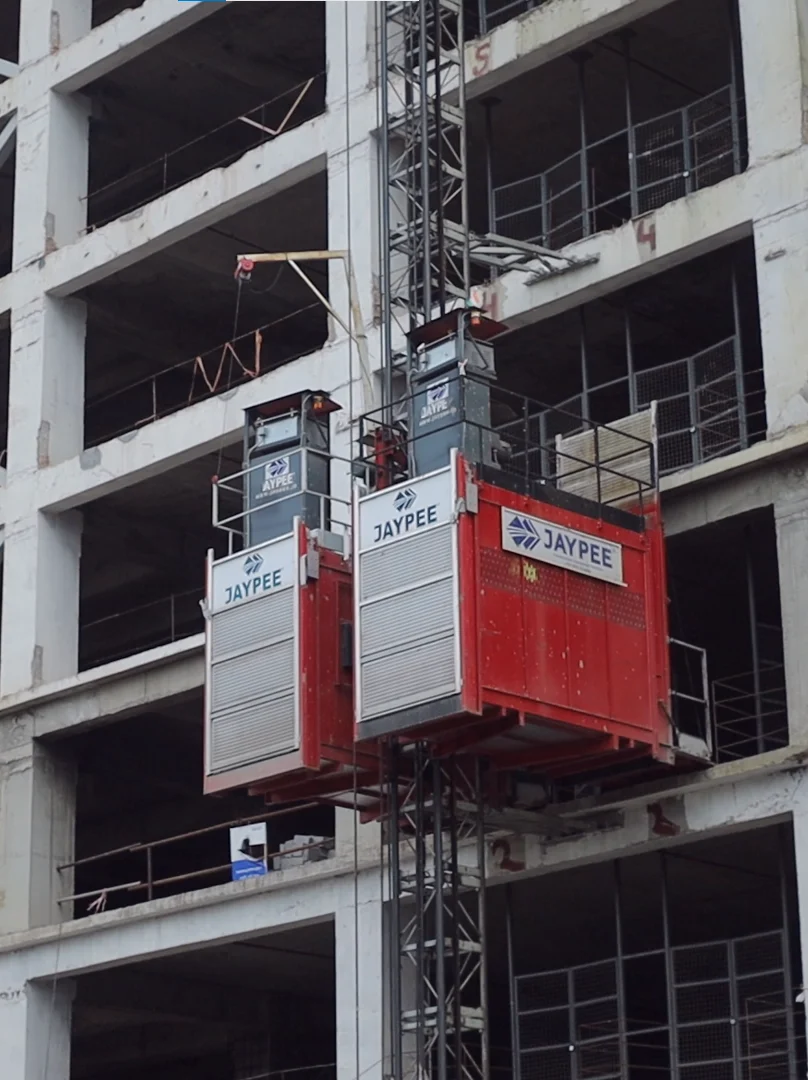
Key Features of Jaypee® Passenger Hoist
Variable Frequency Drive (VFD) Control
Every Jaypee® passenger hoist model includes a variable frequency drive for stepless speed regulation from 0 to 96 m/min. VFD control eliminates jerk on start and stop, reduces mechanical wear across the drive system, and improves passenger comfort—critical on high-rise sites where the hoist runs continuously across multiple shifts.
PLC-Based Safety Automation
A Programmable Logic Controller monitors every operational parameter in real time — overload, overspeed, door interlock, and floor position. When any parameter is breached, the PLC triggers an automatic safety response before human intervention is possible. This is the same control architecture used in European-standard construction hoists.
CE Certified and IS Compliant
All Jaypee® passenger hoist models carry full CE certification, meeting European safety benchmarks. This is not a cosmetic certification — CE compliance requires third-party testing of the anti-fall safety device, overspeed governor, emergency brake, and structural load performance. CE-certified passenger hoist are accepted by project consultants and government-approved contractors across India and international markets.
Maximum Lifting Height — 450 Metres
Modular hot-dip galvanised mast sections allow the hoist to grow with the building. Additional mast sections are bolted on as construction progresses vertically — no need to replace the base unit. Jaypee® passenger hoist reach a maximum lifting height of 450 metres, making them suitable for India’s tallest high-rise projects.
Lifting Speed — Up to 96 m/min
The high-speed VFD variant of the Jaypee® passenger hoist reaches 96 metres per minute. On a 30-storey building, this cuts round-trip time to under 90 seconds — a measurable improvement in daily worker productivity compared to standard-speed construction hoists.
Hot-Dip Galvanised Mast Sections
Mast sections are hot-dip galvanised, not painted. Galvanisation penetrates the steel surface rather than coating it, providing corrosion resistance against monsoon rain, humidity, and on-site chemical exposure that painted mast sections cannot match over a 12–24 month project duration.
Single and Twin Cage Configurations
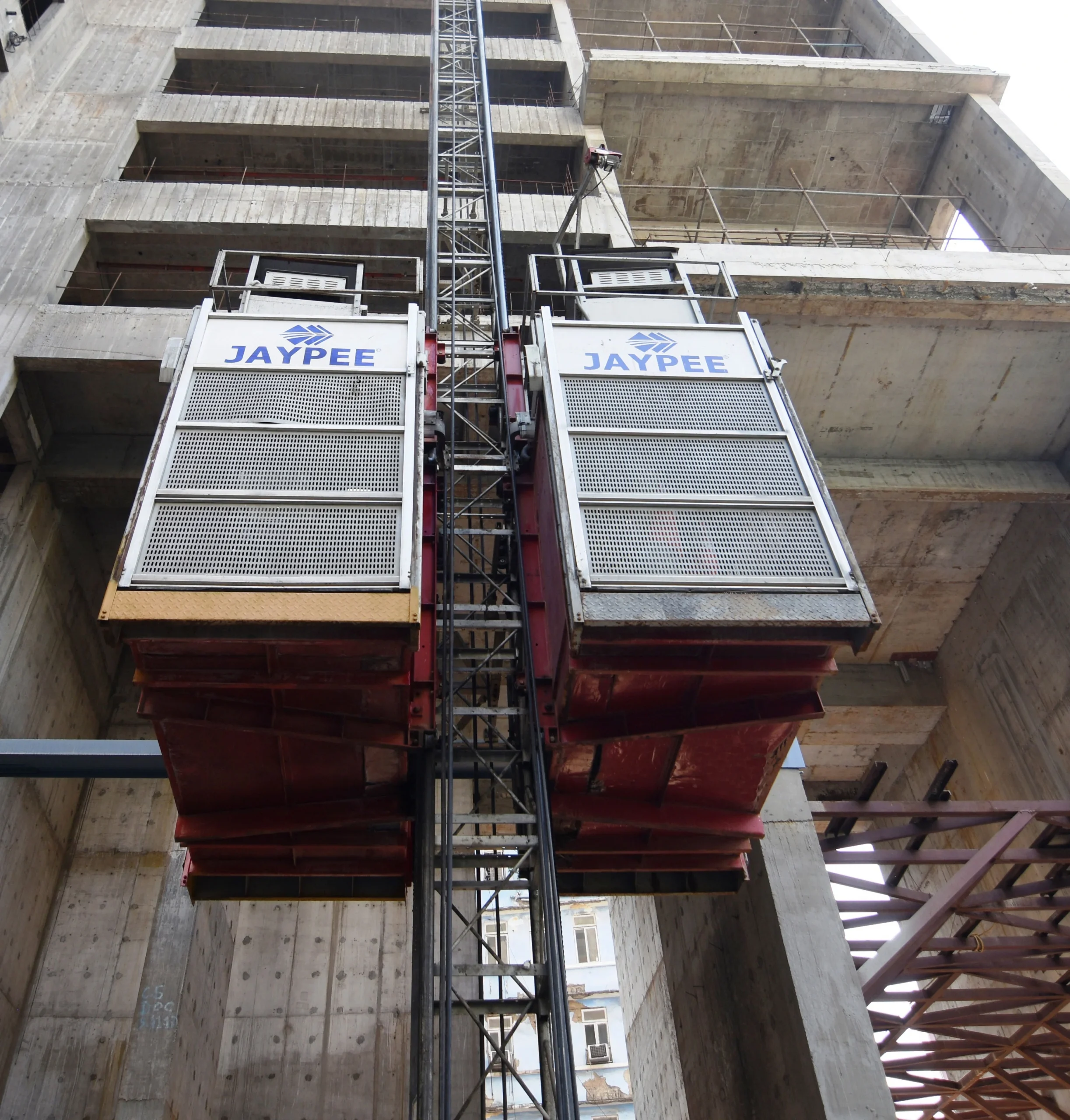
Single cage configurations suit standard sites with moderate worker traffic. Twin cage configurations allow simultaneous upward and downward movement on the same mast — essential on high-traffic sites with 200+ workers where a single cage creates bottlenecks during shift changes.
Fingerprint Access Control
Advanced Jaypee® models include biometric fingerprint access control, restricting hoist operation to authorised personnel only. This prevents unauthorised use, reduces liability, and satisfies the access control requirements of premium residential and commercial projects.
Stainless Steel Electrical Cabinets
All electrical enclosures are stainless steel, not powder-coated mild steel. On outdoor construction sites, standard painted cabinets corrode within months. Stainless steel enclosures maintain IP-rated protection throughout the project lifespan without degradation.
Wireless Remote Operating Facility
Authorised personnel can call and operate the passenger hoist from any floor without entering the cage control panel — improving logistics efficiency on large sites where the cage is constantly in demand across multiple floors.
Jaypee PMH Series — Model Comparison
Choosing the right model depends on your building height, worker volume per shift, and site logistics. As a general rule: PMH 100 suits builds under 150m, PMH 150–200 covers most 15–60 floor projects, and PMH 250 is built for supertall towers above 350m.
Passenger Hoist vs Material Hoist — What Is the Difference?
This is the most common question asked by project managers specifying construction hoisting equipment for the first time.
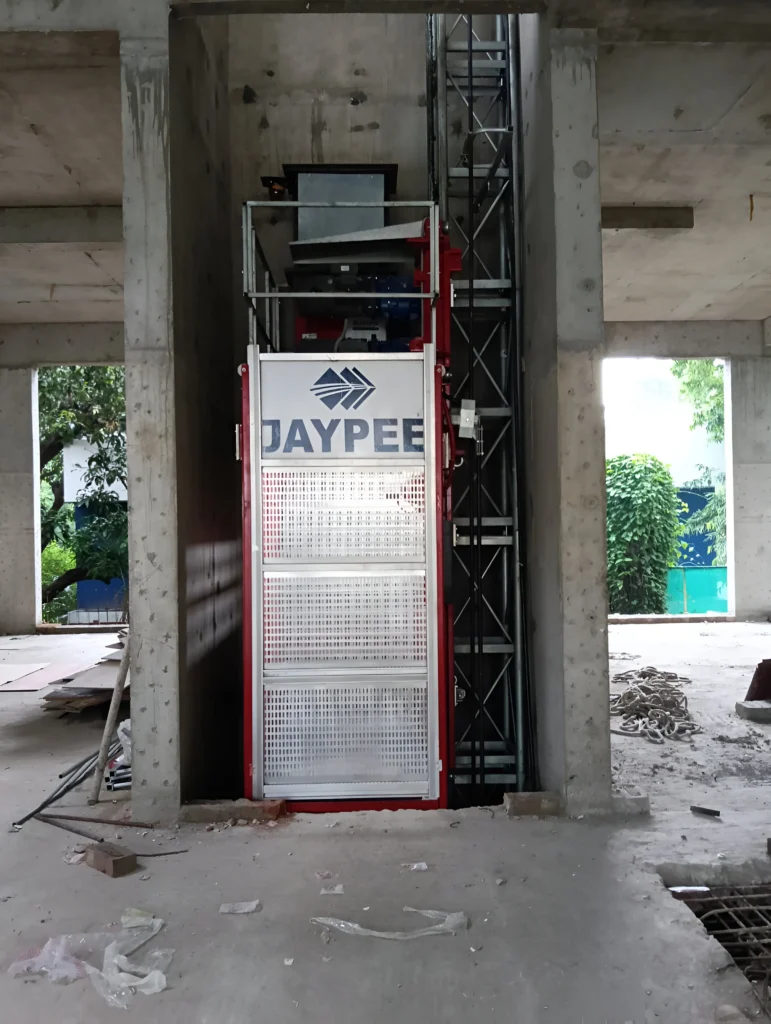
A passenger hoist is designed and certified specifically for carrying people. It has an enclosed, reinforced cabin with anti-slip flooring, interior lighting, handrails, and safety systems tested to passenger-carrying standards. Workers can ride safely in a passenger hoist at all times during normal operation.
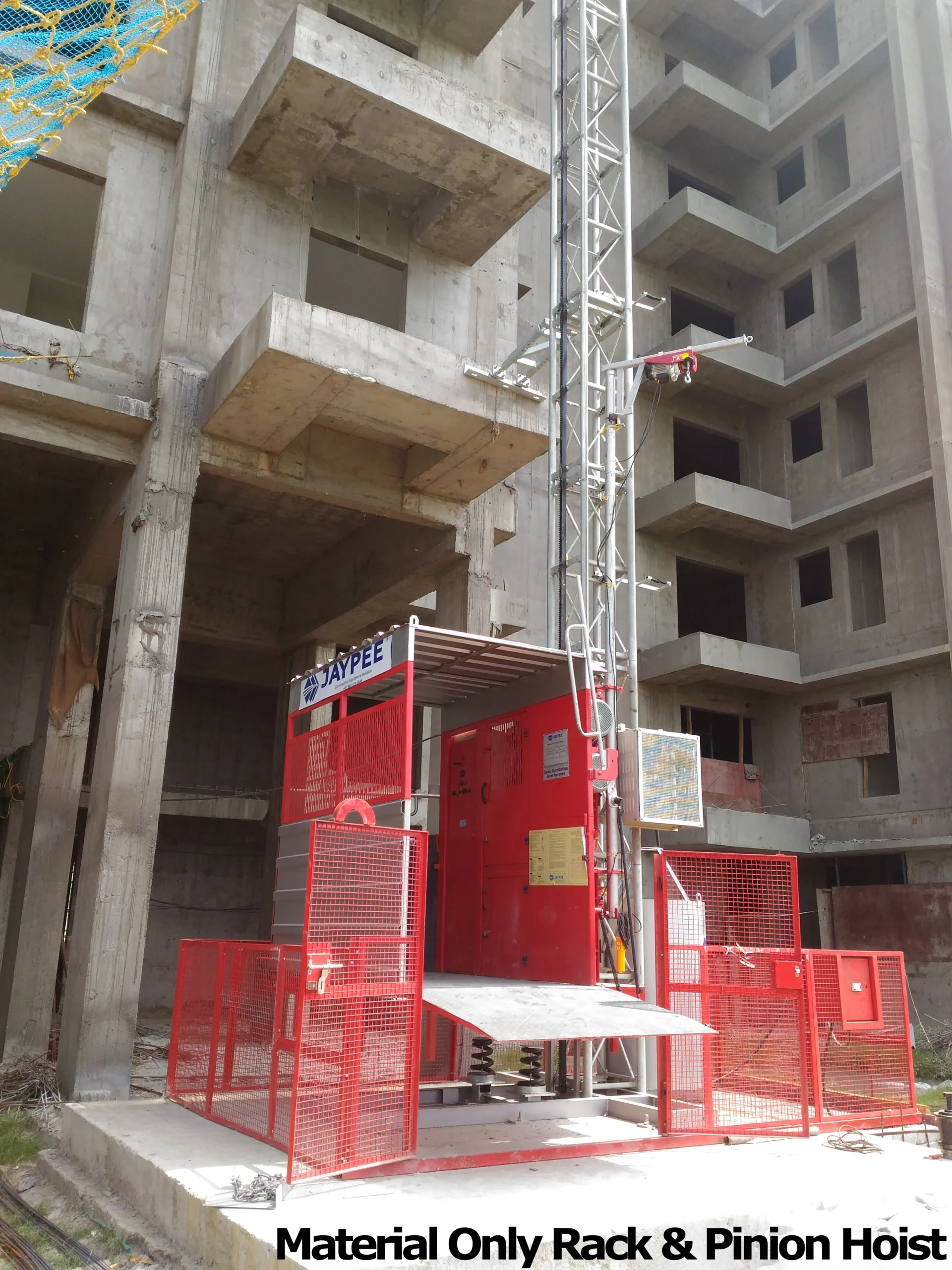
A material hoist (also called a goods hoist or cargo hoist) is designed exclusively for lifting construction materials — bricks, steel, concrete, tools, and equipment. Material hoists are not certified for passenger use. Workers must never ride in a material-only hoist under any circumstances, regardless of how the cage looks from the outside.
A construction passenger and material hoist is a dual-rated unit that is certified for both workers and materials simultaneously, subject to combined weight limits.
Quick reference:
| Feature | Passenger Hoist | Material Hoist |
|---|---|---|
| Workers allowed | Yes | No |
| Materials allowed | Yes (within capacity) | Yes |
| Enclosed cabin | Always | Optional |
| Safety certification | CE / IS passenger standard | CE / IS materials standard |
| Speed | Up to 96 m/min | Up to 60 m/min typically |
| Best for | High-rise residential, commercial | Heavy material lifting |
If your site requires both worker transport and heavy material lifting simultaneously, Jaypee® also manufactures dedicated Construction Passenger & Material Hoists and Material-Only Rack & Pinion Hoists — see the full product range below.
Applications of Passenger Hoist in Construction
Jaypee® passenger hoist are installed across every segment of the Indian and international construction industry:
High-Rise Residential Construction — Worker transport across 20–60+ storey residential towers where staircase use is impractical and fatigue-related accidents are a serious liability risk.
Commercial Building Projects — Office towers, hotels, and mixed-use developments require continuous worker transport across multiple active floors during finishing, MEP installation, and facade work.
Infrastructure Development — Bridges, metro rail viaducts, flyovers, and large civil structures require vertical access at heights where conventional scaffolding ladders create unacceptable safety risk.
Industrial Plant Construction — Refineries, power plants, and manufacturing facilities involve working at elevation with heavy personal protective equipment — making hoist-based vertical transport essential.
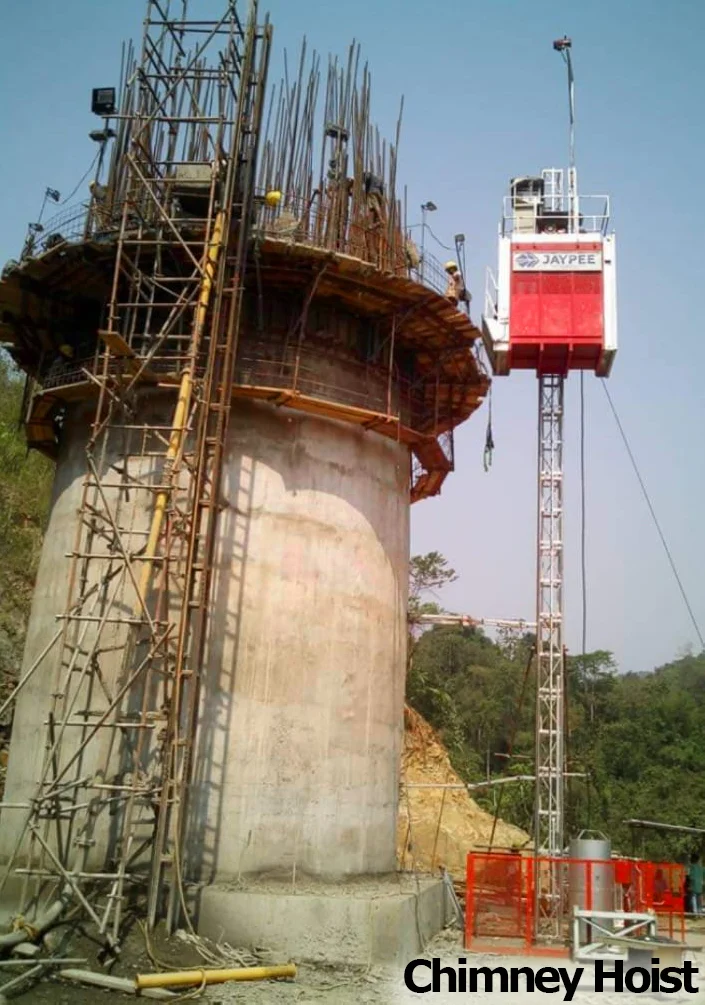
Chimney and Tower Construction — Jaypee® manufactures a specialised Chimney Hoist for narrow vertical structures, and the standard passenger hoist range supports general tower construction requirements.
Key Safety Features
Expand your existing safety content into a scannable list—Google favors structured, skimmable safety content for this query type:
- Anti-fall/overspeed governor (rated for full passenger load)
- Mechanical door interlocks on cabin + every landing
- PLC-based overload detection with auto shutdown
- VFD step-less speed control (eliminates jerk on start/stop)
- Emergency brake + backup electrical system
Why Contractors Across India Choose Jaypee® Passenger Hoist
Decades of Manufacturing Experience Jaypee® India Limited has been manufacturing construction hoisting equipment for decades, with hundreds of successful passenger hoist installations across India’s residential, commercial, and infrastructure sectors. When you specify a Jaypee® passenger hoist, you are buying from the manufacturer — not a distributor.
Pan-India Service Network Fast-response Jaypee® service teams and genuine spare parts are available across all major Indian cities — Kolkata, Delhi, Mumbai, Chennai, Hyderabad, and beyond. Downtime on a construction hoist is a productivity emergency. Jaypee’s pan-India network means issues are resolved in hours, not days.
Manufacturer-Direct Pricing No distributor markups. No middlemen. When you buy directly from Jaypee®, you receive manufacturer pricing, direct technical support, and access to engineering customisation that third-party distributors cannot provide.
ISO-Compliant, CE-Certified Manufacturing Jaypee® passenger hoist are manufactured under ISO-compliant processes and carry full CE certification. Every unit is tested before dispatch. This is the certification standard required by premium project consultants, government-tendered contracts, and international project specifications.
Full After-Sales Support and AMC Jaypee® offers Annual Maintenance Contracts for all passenger hoist models, ensuring your equipment remains in peak operating condition throughout the project. Preventive maintenance schedules, emergency response, and genuine parts availability are included.
– 42+ years manufacturing passenger and material hoists
– CE-certified per European Machinery Directive 2006/42/EC
– Operations across 20+ countries
– In-house engineering, manufacturing, and after-sales service
– [200000 installations, e.g., “500+ hoists deployed”]
Passenger Hoist Installation — What to Expect
A Jaypee® passenger hoist installation follows a defined process managed by trained Jaypee® engineers:
Site Survey and Foundation Planning — Jaypee® engineers conduct a site survey to confirm base positioning (typically 3–3.5 metres from the building outer edge), foundation load requirements, drainage design, and wall-tie anchor points.
Base and Mast Installation — The base frame is levelled, secured, and the initial mast sections are erected. Correct levelling at the base is critical — even minor misalignment compounds at height.
Cage and Drive Unit Assembly — The hoist cage, motor, gearbox, and rack-and-pinion drive unit are assembled and connected. The VFD control panel is commissioned and all safety devices are tested.
Wall Tie Installation — Wall ties (mast anchors) are installed at specified intervals — typically every 6–9 metres — as the mast rises with the building. Ties must be anchored to the structural frame, not to facade or finishing elements.
Pre-Commissioning Safety Tests — Before the first passenger use, Jaypee® engineers run a full pre-commissioning test: load test at 110% rated capacity, overspeed governor test, emergency brake test, all limit switch tests, and a full door interlock check.
Operator Training — A trained site operator is essential. Jaypee® provides operator training as part of the installation service.
Passenger Hoist Safety Standards and Certifications
Safety is not optional on a construction passenger hoist. Jaypee® passenger hoist comply with the following standards:
CE Certification — European conformity marking confirms the product meets EU Machinery Directive 2006/42/EC safety requirements. CE-marked construction hoists are accepted by premium project specifications globally.
IS 7521 (Bureau of Indian Standards) — The Indian standard for construction hoists, covering design, manufacture, installation, inspection, and maintenance requirements for passenger-carrying construction hoists operating in India.
ISO 16368 — International standard for mobile elevating work platforms, specifying safety requirements for design, calculations, stability, construction, examination, testing, and safe working practices.
Anti-Fall Safety Device (Centrifugal Governor) — Every Jaypee® passenger hoist is equipped with a centrifugal anti-fall safety device. If the cage descent speed exceeds the rated limit — due to rope break, drive failure, or any other cause — the governor engages the emergency brake mechanically, stopping the cage within a defined distance regardless of electrical power status.
Frequently Asked Questions About Passenger Hoist
Q1: What is a passenger hoist used for?
A passenger hoist is used to transport construction workers safely between the ground and upper floors of a building under construction. It eliminates the need for workers to climb staircases or scaffolding, reducing fatigue-related accidents and improving productivity on high-rise sites.
Q2: What is the load capacity of Jaypee passenger hoists?
Jaypee passenger hoists range from 700 kg to 2,000 kg across the PMH series (PMH 100, 150, 200, and 250), covering everything from small residential builds to large high-rise towers.
Q3: What is the maximum height a passenger hoist can reach?
Jaypee’s PMH series hoists can operate at heights up to 450 metres, making them suitable for supertall towers and major infrastructure projects.
Q4: How does a passenger hoist work?
A passenger hoist works on a rack-and-pinion mechanism: a toothed rack runs the length of a modular steel mast, and a pinion gear driven by an electric geared motor climbs the rack to move the worker cabin up and down.
Q5: Is a passenger hoist safer than a cable-based hoist?
Yes. Because a passenger hoist’s pinion gear stays permanently meshed with the rack, even a complete drive failure cannot cause uncontrolled descent — unlike cable-based systems, where cable failure can lead to free fall.
Q6: What’s the difference between a passenger hoist and a material hoist?
A passenger hoist is certified to carry workers and is structurally tested at 110% of rated load under dynamic conditions. A material hoist is certified for materials only and tested under static loads — workers must never ride a material-only hoist.
Q7: What safety certifications should a passenger hoist have?
Look for CE certification under the European Machinery Directive 2006/42/EC, which requires third-party testing of the anti-fall device, overspeed governor, structural load performance, and door interlock systems. Jaypee passenger hoists carry full CE certification.
Q8: What is the price of a passenger hoist in India?
Passenger hoist pricing depends on load capacity, lifting height, speed, and cabin size — indicative ranges typically span from a few lakhs for entry-level models to significantly higher for high-capacity, high-speed, high-rise systems. [Contact us / request a quote] for a price based on your project specifications.
Q9: How is a passenger hoist installed?
Installation involves erecting the base enclosure, bolting mast sections progressively as the building rises, mounting the cabin with guide rollers, and commissioning all safety systems (interlocks, limit switches, overspeed governor) before operational handover. Jaypee provides on-site installation support.
Q10: How long does a passenger hoist take to install?
Installation timelines vary with height and site conditions, but base setup and initial mast erection typically take a few days, with additional mast sections added incrementally as construction progresses.
Q11: Can a passenger hoist be used for both workers and materials?
Not a standard passenger-only hoist — for combined use, Jaypee also manufactures passenger-cum-material hoists, which are dual-certified for simultaneous worker and material transport.
Q12: What maintenance does a passenger hoist require?
Regular maintenance includes inspection of the rack and pinion, safety governor testing, brake checks, door interlock verification, and lubrication of moving parts — typically scheduled monthly or per manufacturer guidelines during active project use.
What is the difference between a passenger hoist and a material hoist?
A passenger hoist is certified for carrying workers and is equipped with an enclosed safety cabin, anti-slip flooring, handrails, and passenger-grade safety systems. A material hoist is certified for lifting construction materials only — workers are not permitted to ride in a material-only hoist. Jaypee® manufactures both dedicated passenger hoist and material-only hoists.
Are Jaypee® passenger hoist CE certified?
Yes. All Jaypee® passenger hoist models carry full CE certification, confirming compliance with European Machinery Directive safety requirements. CE certification involves third-party testing of the anti-fall safety device, overspeed governor, structural capacity, and all safety interlock systems.
What routine maintenance does a passenger hoist require?
Daily: visual inspection of cage, doors, rack, and mast. Weekly: lubrication of rack, pinion, and guide rollers; check of all safety interlock systems. Monthly: electrical panel inspection, drive belt and gearbox check. Annually: full structural inspection of mast sections, ties, and base frame; recertification of anti-fall safety device. Jaypee® offers AMC contracts covering all scheduled maintenance.
Can a passenger hoist be used in rain and outdoor conditions?
Yes. Jaypee® passenger hoist are designed for outdoor construction site use. Electrical cabinets are stainless steel with IP-rated protection. Mast sections are hot-dip galvanised for corrosion resistance. For heavy rain or high wind conditions (above the manufacturer’s rated wind speed limit), the hoist must be parked at the base landing and secured.
What is the price of a passenger hoist in India?
Passenger hoist pricing in India depends on the model (PMH 100–250), cage configuration (single or twin), lifting height, and site-specific requirements. Jaypee® offers manufacturer-direct pricing with no distributor markups. Contact Jaypee® for a customised quotation based on your project specifications.
How long does it take to install a passenger hoist?
A standard Jaypee® passenger hoist base installation (up to the first 30 meters) is completed in 2–3 days by a trained installation team. Additional mast sections are added progressively — typically one to two sections per day — as construction proceeds.
What happens if there is a power failure while workers are inside the hoist?
Every Jaypee® passenger hoist is equipped with a manual lowering and rescue facility. In the event of a power failure, trained site personnel can operate the manual descent system to bring the cage to the nearest landing safely. All operators are trained in emergency procedures before the hoist enters service.
Related Jaypee® Products
Looking for a different hoisting solution for your project? Jaypee® manufactures the complete range:
- Construction Passenger & Material Hoist — Dual-rated for both workers and heavy materials simultaneously
- Material Only Rack & Pinion Hoist — Dedicated goods hoist for maximum material lifting capacity
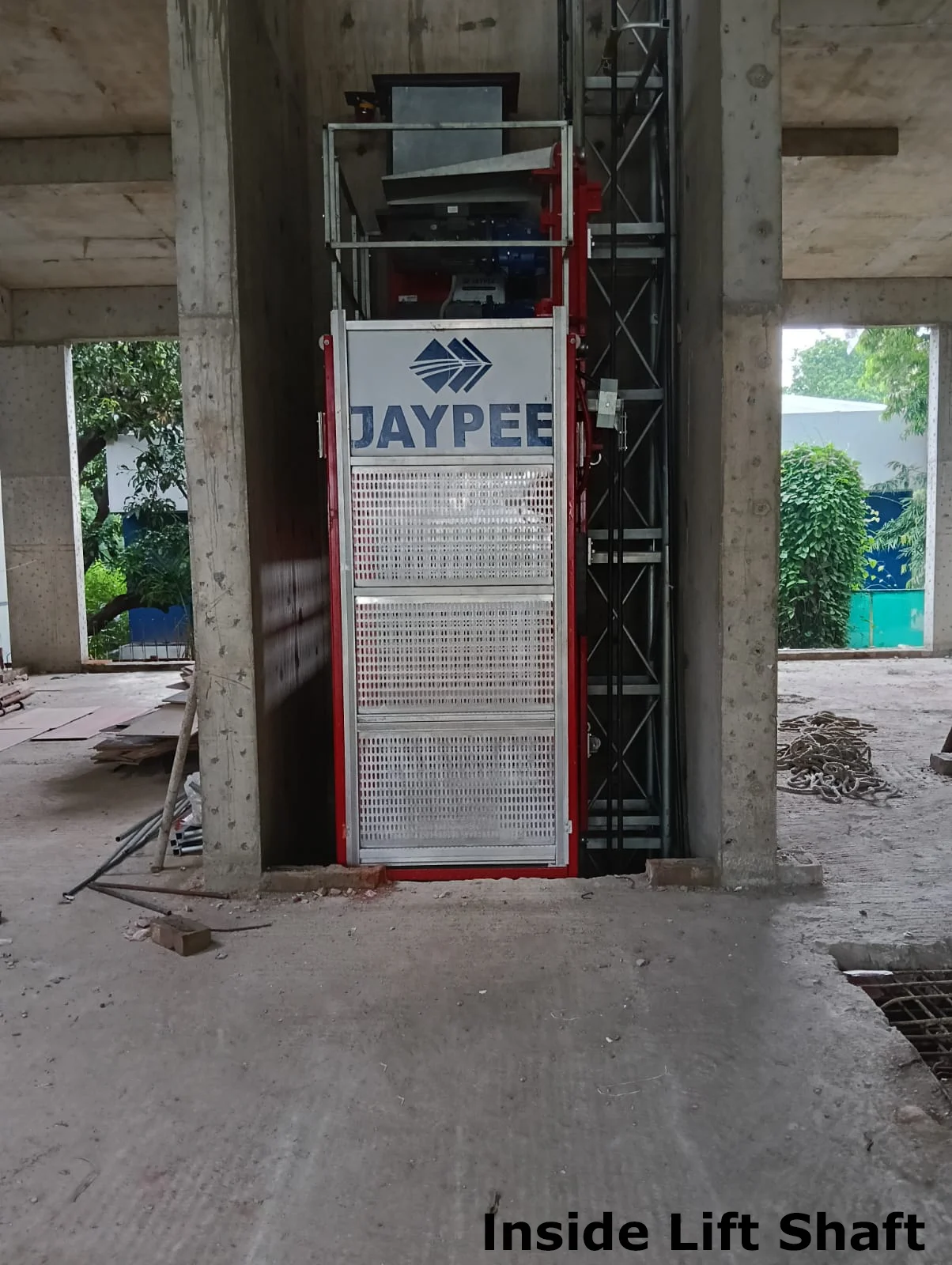
- Inside Lift Shaft Hoist — For permanent shaft installations and interior vertical access
- Chimney Hoist — Purpose-built for narrow chimney and tower structures
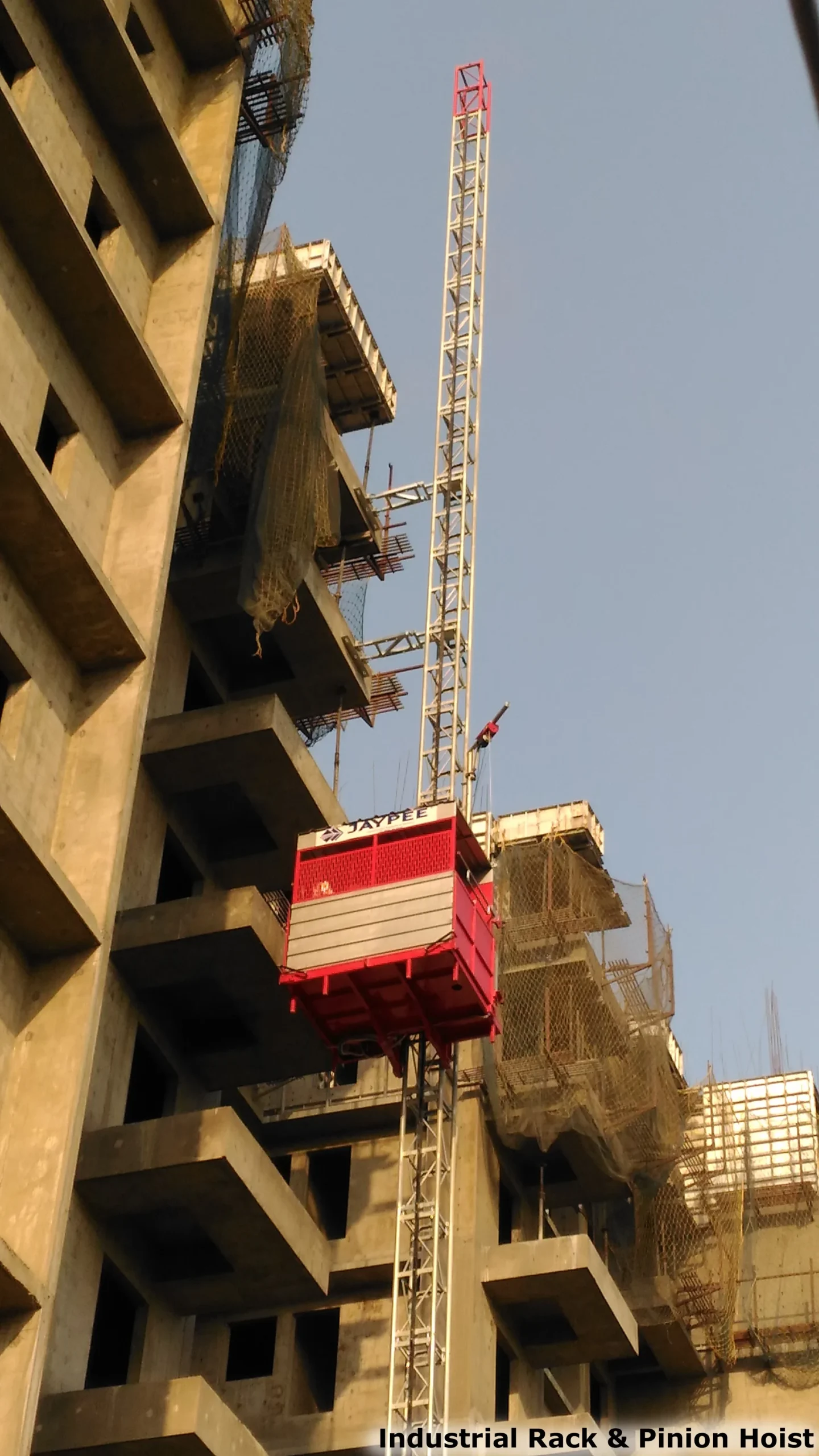
- Industrial Rack & Pinion Elevators — For permanent industrial plant vertical access
- Material Hoist — Read the complete guide to material hoists
Get a Free Consultation for Your Passenger Hoist Project
Jaypee® engineers provide free site consultations for all passenger hoist projects — residential, commercial, infrastructure, or industrial. Whether you need guidance on model selection, installation planning, or a competitive quotation, our team responds within 24 hours.
Case Study: Urbana Residential Towers
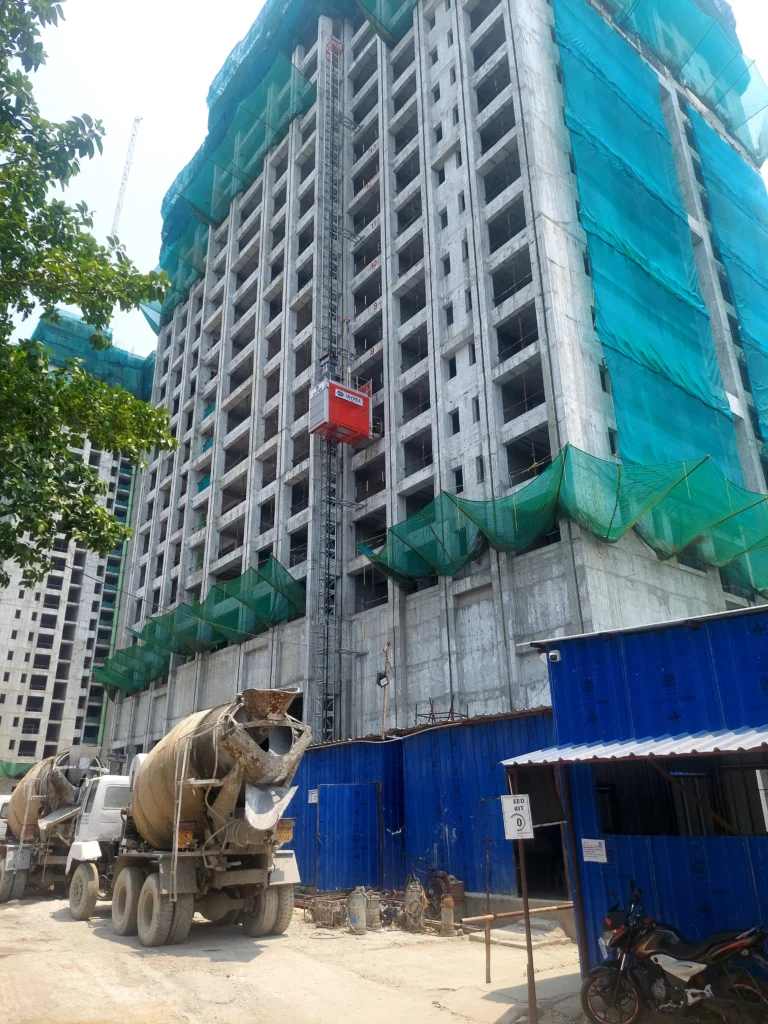
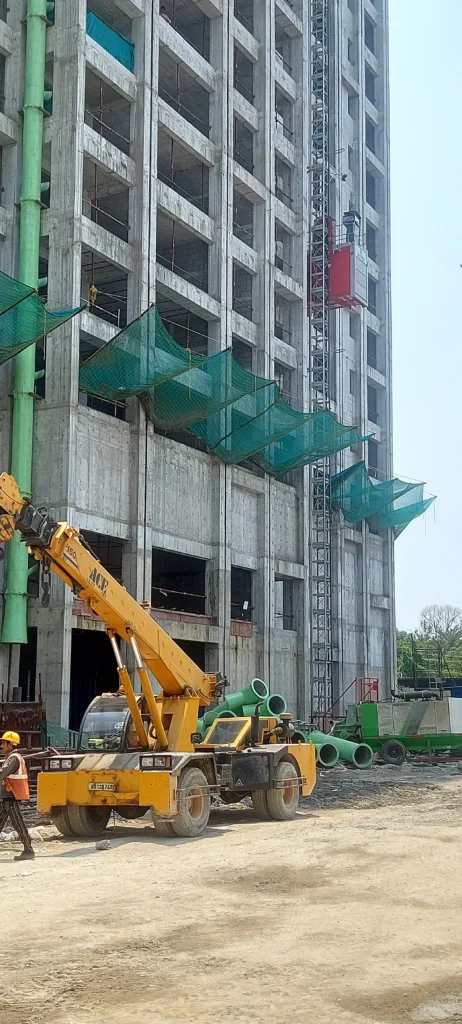
A high-rise residential project in Kolkata Urbana required reliable worker transport across dozens of active floors during peak construction. Jaypee deployed a PMH 200 passenger hoist (1,500 kg capacity), enabling continuous, safe vertical movement for the site’s workforce throughout the project duration — with no reported safety incidents during operation.
Contact Jaypee® India Limited:
- WhatsApp / Call: +91 96745 15151
- 24×7 Hotline: +91 90512 34444
- Email: solutions@jaypee.in
- Head Office: 11, Dr. Rajendra Prasad Sarani (Clive Row), Kolkata 700 001
- Delhi: 1111, Hemkunt Chambers, 89 Nehru Place, New Delhi 110019
- Mumbai: Jaypee House, CBD Belapur 400614
Looking for a reliable Passenger Hoist manufacturer in India? Contact Jaypee India Limited for product details, specifications, and pricing.